
 Image 1 of 1
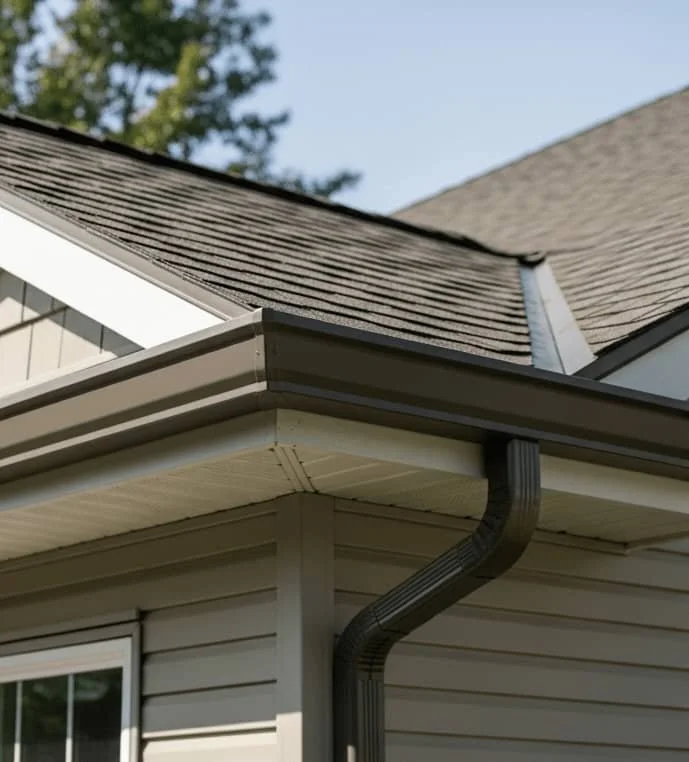
House water gutters are roof-edge channels designed to collect and direct rainfall away from a building’s foundation, walls, windows, and landscaping. Properly sized and installed gutters protect structural integrity by preventing soil erosion, basement flooding, foundation settling, and exterior water damage such as paint failure, wood rot, and masonry staining.
Key components
Gutters: Horizontal troughs that run along roof eaves to capture rainwater. Common materials include aluminum, steel, vinyl, copper, and zinc. Profiles include K-style, half-round, and box-style.
Downspouts: Vertical pipes that carry water from gutters down to ground level or drainage systems. They are sized and positioned to handle peak flow rates.
Hangers and brackets: Hardware that secures gutters to fascia or roof edge and maintains slope for drainage.
End caps and miters: Fittings used to close or join gutter lengths and to form corners.
Splash blocks, extensions, or underground drain lines: Solutions that disperse or carry runoff away from the foundation.
Performance considerations
Slope (pitch): Gutters must be installed with a slight pitch (typically 1/16–1/8 inch per foot) toward downspouts to prevent standing water and ensure efficient flow.
Capacity: Gutter size and downspout diameter must match expected rainfall intensity and roof area. Larger roofs or heavy-rain regions require wider gutters (e.g., 6-inch vs. 5-inch).
Debris management: Leaves, needles, and roof grit can clog gutters and downspouts. Options include gutter guards, screens, regular cleaning, and gutter covers to reduce maintenance.
Ice and snow: In cold climates, icicles and ice dams can form, causing blockages and damage. Proper attic insulation, ventilation, and specialized snow/ice protection products mitigate risk.
Corrosion and durability: Material selection affects lifespan and maintenance—aluminum resists rust and is lightweight; steel is strong but prone to rust unless coated; copper is durable and low-maintenance but costly.
Installation and maintenance tips
Position downspouts to discharge at least 3–4 feet from the foundation or into a routed drain to avoid pooling near the house.
Inspect gutters at least twice a year (spring and fall) and after major storms for clogs, leaks, sagging, or separated seams.
Seal small leaks with appropriate gutter sealant and replace damaged sections or worn hangers promptly.
Maintain attic insulation and ventilation to reduce ice dam formation.
Consider professional inspection and installation for complex rooflines, multi-story homes, or when planning integrated drainage systems.
A well-designed gutter system channels rainwater safely away from the structure, minimizes maintenance when paired with effective debris management, and helps preserve a home’s value and longevity.
House water gutters are roof-edge channels designed to collect and direct rainfall away from a building’s foundation, walls, windows, and landscaping. Properly sized and installed gutters protect structural integrity by preventing soil erosion, basement flooding, foundation settling, and exterior water damage such as paint failure, wood rot, and masonry staining.
Key components
Gutters: Horizontal troughs that run along roof eaves to capture rainwater. Common materials include aluminum, steel, vinyl, copper, and zinc. Profiles include K-style, half-round, and box-style.
Downspouts: Vertical pipes that carry water from gutters down to ground level or drainage systems. They are sized and positioned to handle peak flow rates.
Hangers and brackets: Hardware that secures gutters to fascia or roof edge and maintains slope for drainage.
End caps and miters: Fittings used to close or join gutter lengths and to form corners.
Splash blocks, extensions, or underground drain lines: Solutions that disperse or carry runoff away from the foundation.
Performance considerations
Slope (pitch): Gutters must be installed with a slight pitch (typically 1/16–1/8 inch per foot) toward downspouts to prevent standing water and ensure efficient flow.
Capacity: Gutter size and downspout diameter must match expected rainfall intensity and roof area. Larger roofs or heavy-rain regions require wider gutters (e.g., 6-inch vs. 5-inch).
Debris management: Leaves, needles, and roof grit can clog gutters and downspouts. Options include gutter guards, screens, regular cleaning, and gutter covers to reduce maintenance.
Ice and snow: In cold climates, icicles and ice dams can form, causing blockages and damage. Proper attic insulation, ventilation, and specialized snow/ice protection products mitigate risk.
Corrosion and durability: Material selection affects lifespan and maintenance—aluminum resists rust and is lightweight; steel is strong but prone to rust unless coated; copper is durable and low-maintenance but costly.
Installation and maintenance tips
Position downspouts to discharge at least 3–4 feet from the foundation or into a routed drain to avoid pooling near the house.
Inspect gutters at least twice a year (spring and fall) and after major storms for clogs, leaks, sagging, or separated seams.
Seal small leaks with appropriate gutter sealant and replace damaged sections or worn hangers promptly.
Maintain attic insulation and ventilation to reduce ice dam formation.
Consider professional inspection and installation for complex rooflines, multi-story homes, or when planning integrated drainage systems.
A well-designed gutter system channels rainwater safely away from the structure, minimizes maintenance when paired with effective debris management, and helps preserve a home’s value and longevity.